Understand non-contact ultrasonic sensing
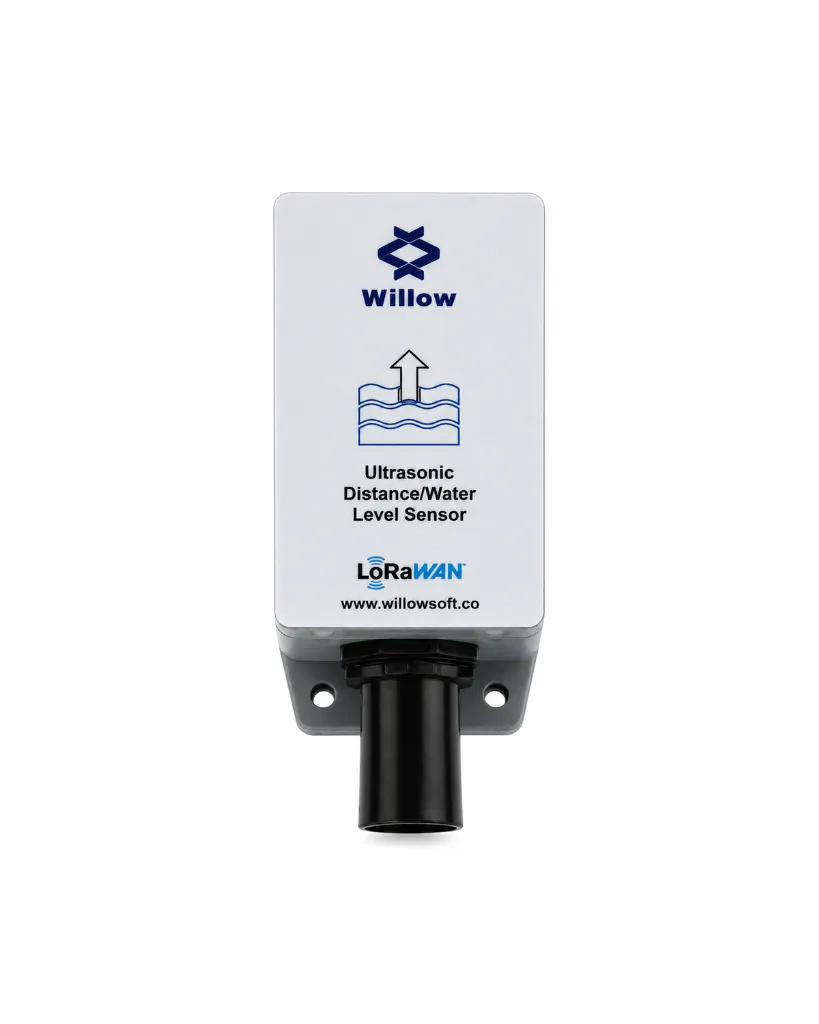
Ultrasonic sensors (such as WillowSonic) measure distance via acoustic Time-of-Flight (ToF). They are ideal for open water reservoirs, wastewater pits, grain silos, and stormwater networks because they eliminate fluid contact and corrosive wear. However, acoustic blind zones (dead zones) and heavy surface foam require careful placement.
Evaluate hydrostatic pressure transmitters
Hydrostatic level transmitters (such as WillowPre) measure bottom head pressure (P = ρ·g·h). They are unaffected by surface turbulence, foam, or vapor, making them the preferred choice for sealed tanks and deep wells where top-down acoustic line-of-sight is unavailable.
Factor in chemical compatibility and IP protection
Ensure wetted materials (316L stainless steel, PVDF) and ingress protection (IP67 or IP68) match chemical vapors and submersion risks. In outdoor and sewage installations, condensation and corrosive gases (H2S, methane) demand sealed electronics.
Design autonomous LoRaWAN telemetry
Combine periodic hourly level checks with immediate high-level overflow threshold alarms. Calculate payload size and battery budget to ensure multi-year autonomous operation.
Selection checklist
Selection checklist
- Liquid characteristics and foam risk
- Tank geometry and dead-zone clearance
- Mounting location and IP rating
- Threshold alarm policy
- LoRaWAN payload integration
- Battery lifecycle plan